How 21-year old Tanner Valant Turned His Obsession into an Art Career
March 25, 2026
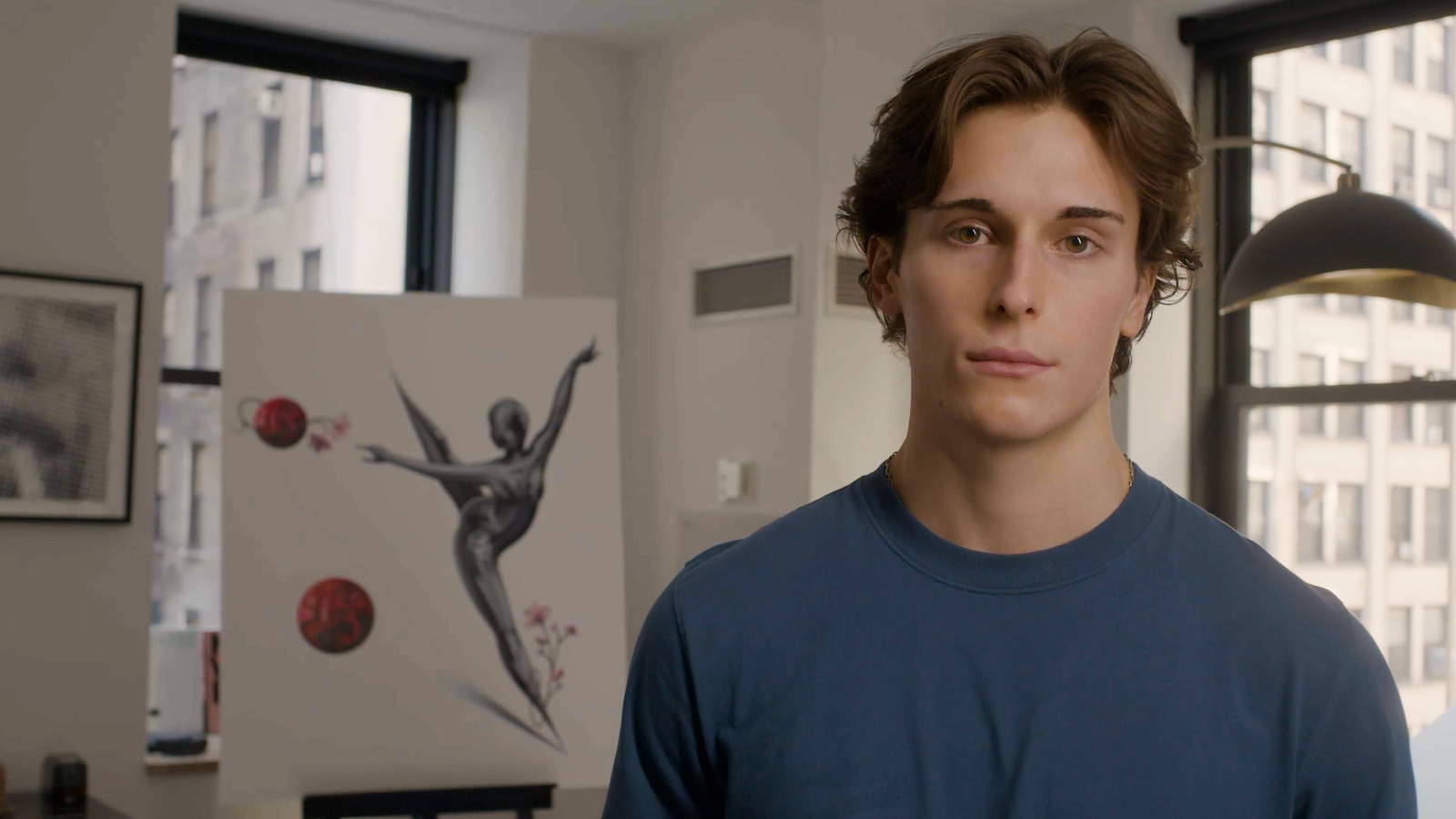
When we spoke with Tanner Valant, what stood out wasn’t just the precision of his work, but the tension underneath it.
At first glance, his drawings feel controlled. Hyper-detailed. Technical. But the longer you look, the more that certainty starts to slip. Familiar forms distort. Natural elements appear inside artificial surfaces. What seems exact becomes ambiguous.
That contradiction is central to how he works.
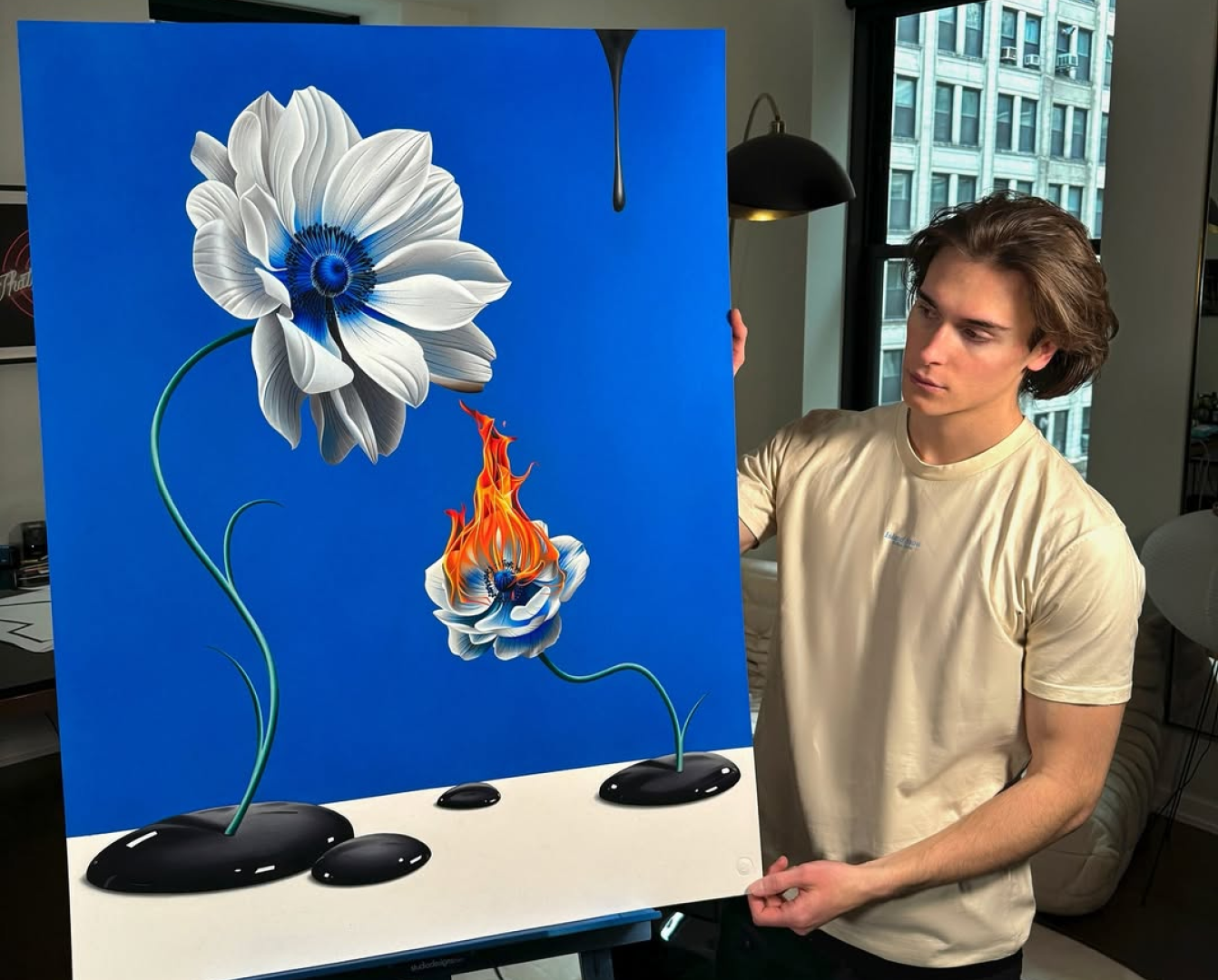
“I’m trying to create this conversation between the artificial world and the natural world,” he told us.
Tanner isn’t interested in resolving that tension. He’s interested in holding it.
Control as a starting point
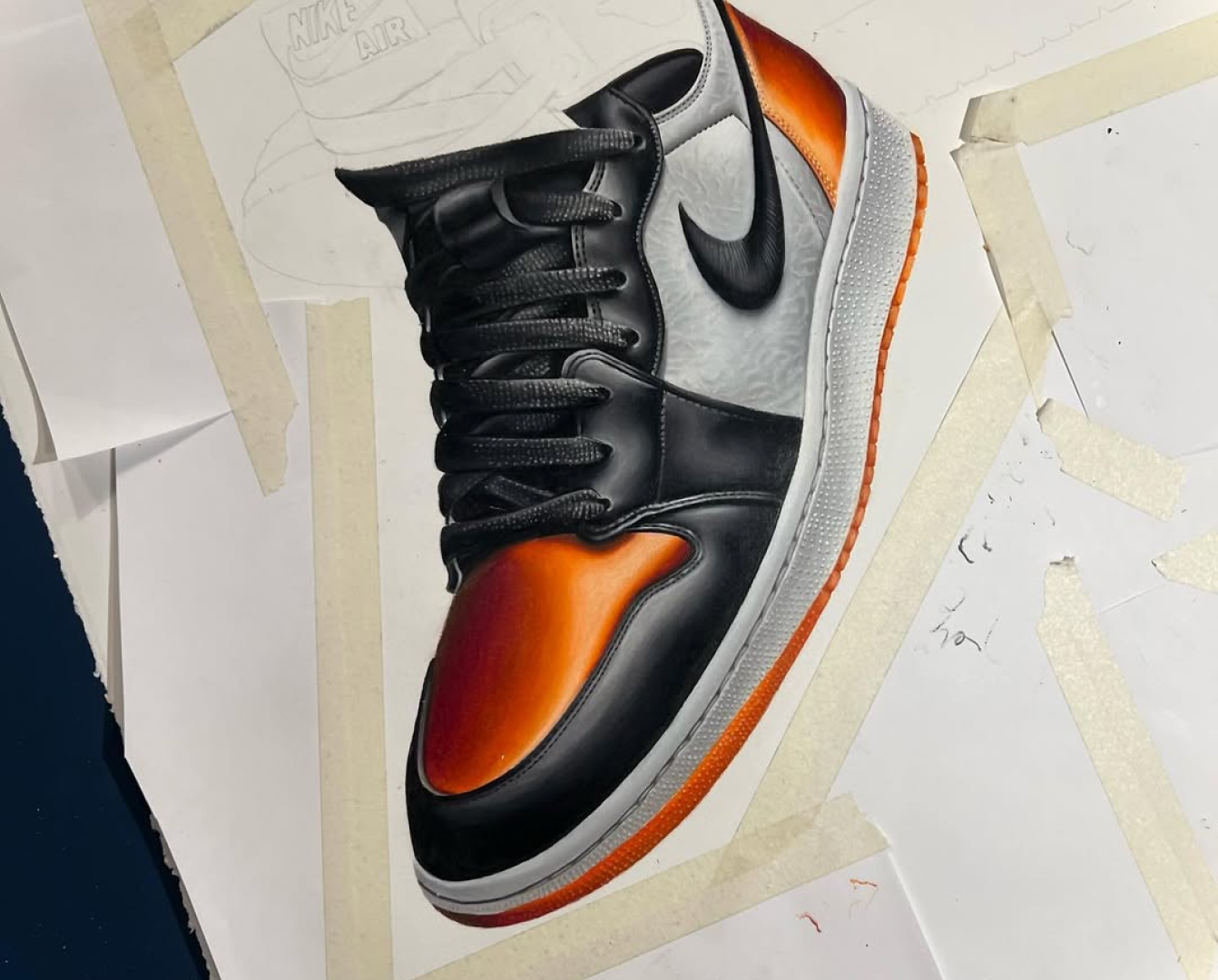
Tanner’s entry into art wasn’t driven by concept, but by repetition.
“I was drawing all day and all night,” he said.
What began during COVID as a way to fill time quickly turned into something more focused. Early on, the goal was simple: learn how to draw as accurately as possible.
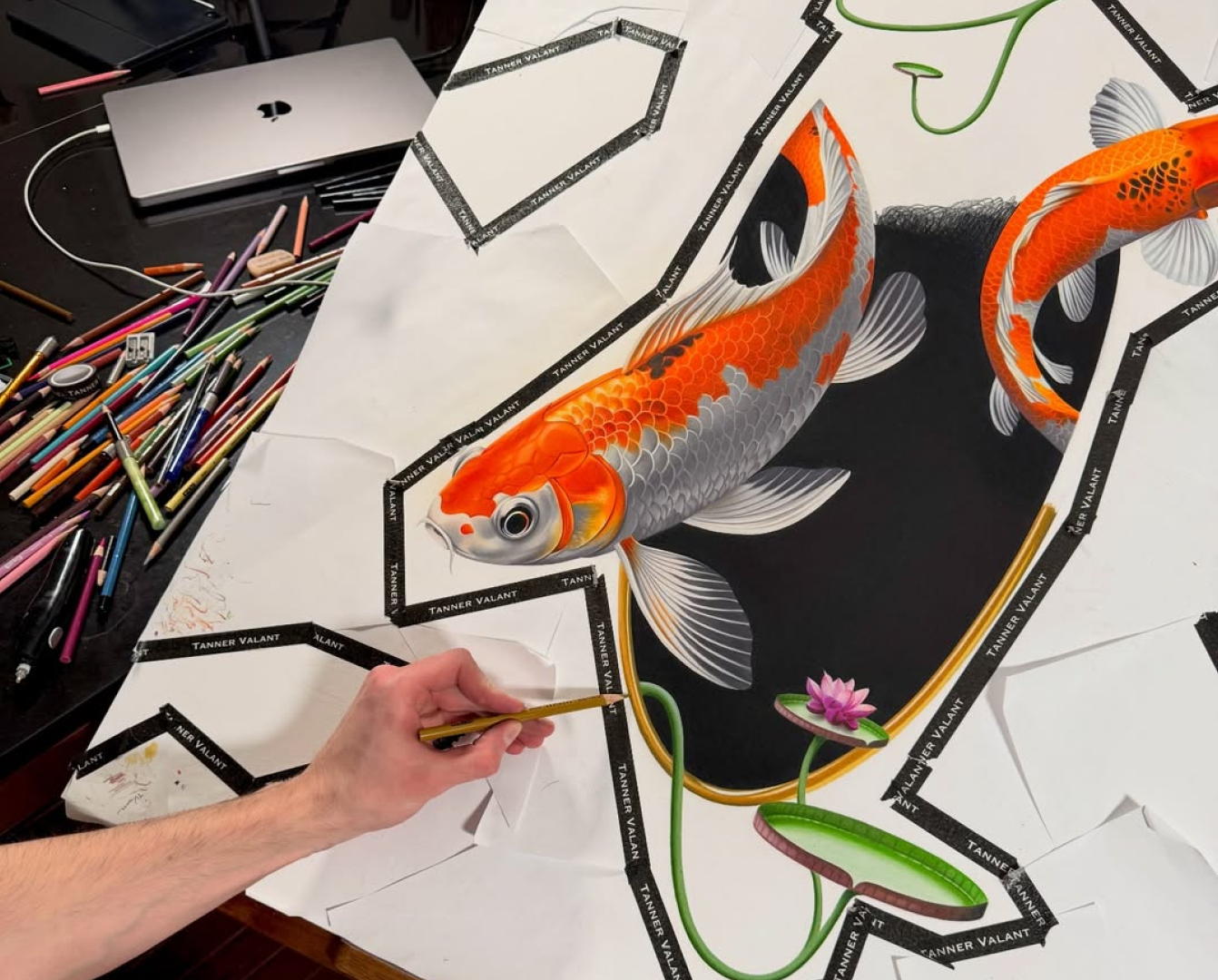
“It allows me to achieve a really high level of detail,” he explained of colored pencil.
The medium reinforced that mindset. Every mark required attention. Every surface had to be built slowly, layer by layer.
“When you're working… it’s such a fine point that it really gets you close… it’s a very peaceful way of creating.”
But over time, that control started to feel limiting.
Breaking the surface
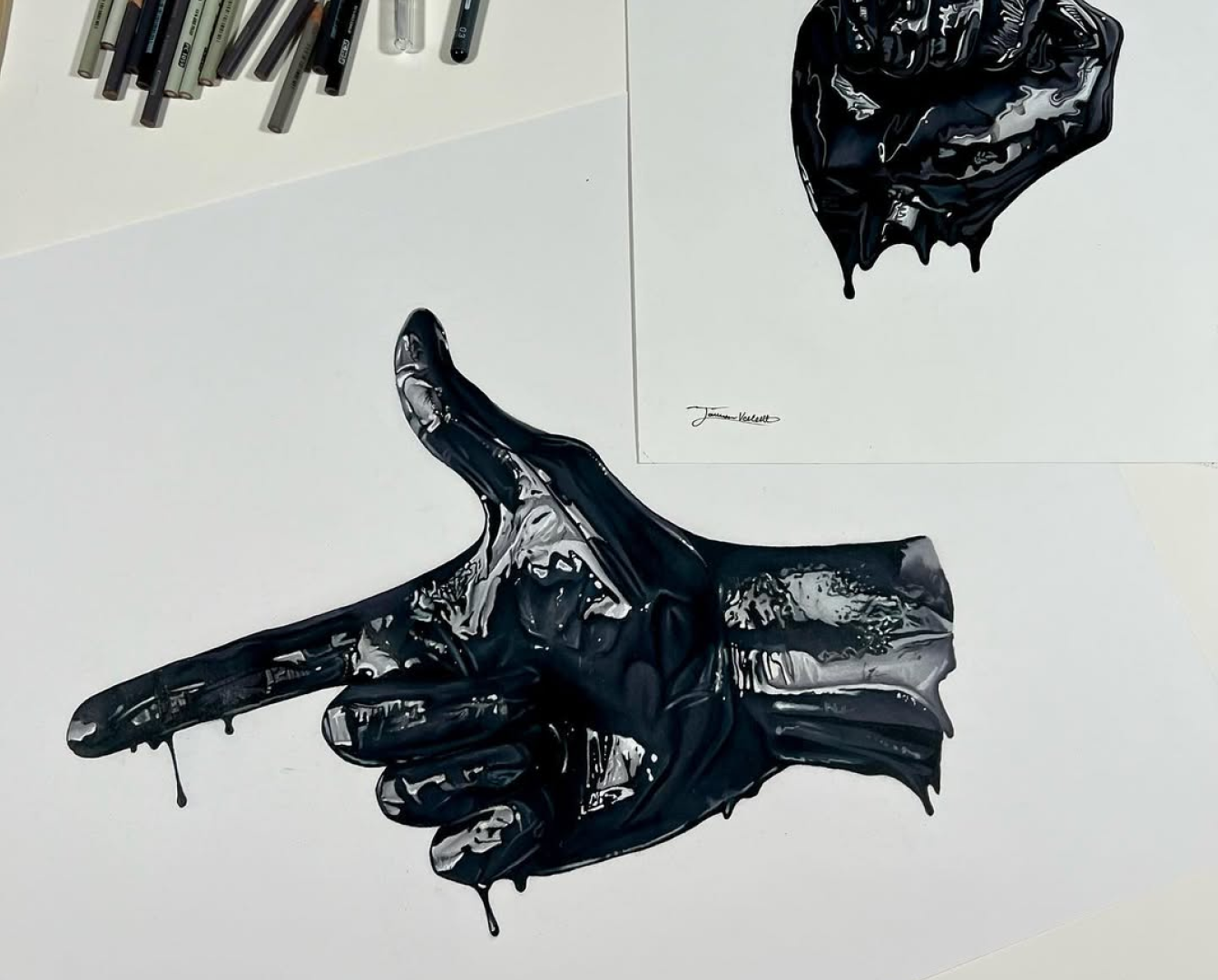
As his technical ability grew, Tanner began to question what all that precision was for.
Rendering objects perfectly wasn’t enough. He wanted the work to hold something less fixed.
“There was definitely some anxiety… in fear of losing supporters or people not liking what I was creating,” he said.
Stepping away from hyperrealism meant giving up certainty. It meant moving from something measurable to something interpretive.
“That allowed me to tap into my emotions and my creative state.”
From that point, his work shifted. The technical foundation stayed, but its purpose changed. Realism became a tool, not the destination.
Between natural and artificial
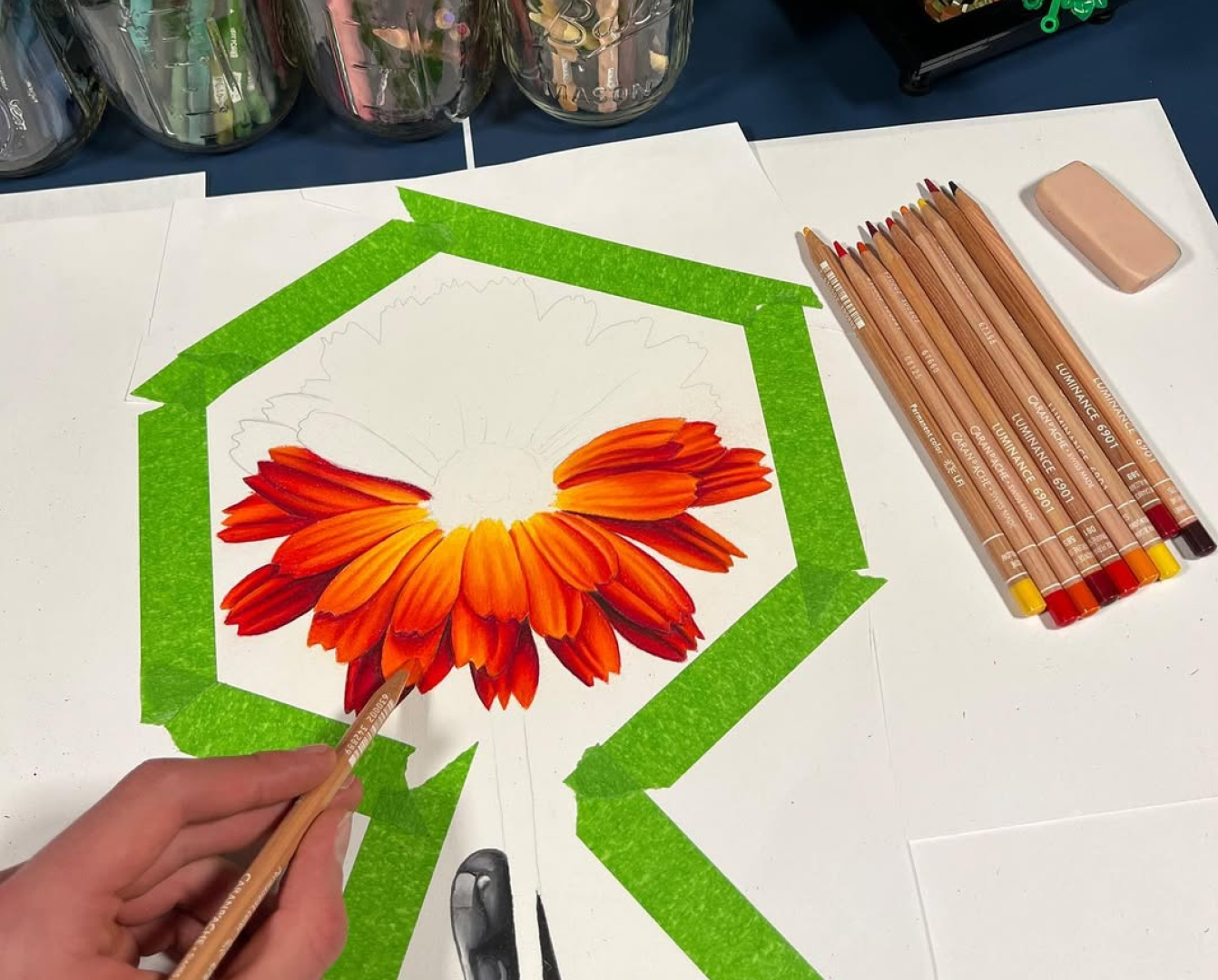
That shift opened up a space Tanner keeps returning to, the intersection between two worlds.
“I’m trying to create this conversation between the artificial world and the natural world,” he said.
Growing up surrounded by nature in Colorado and now living in Chicago, that contrast isn’t abstract. It’s lived.
In his work, organic elements, flowers, branches, the human form, exist alongside glossy, constructed surfaces. Sometimes they feel supported. Sometimes they feel threatened.
“Are they harmoniously existing together, or is this artificial world… consuming the natural one?”
The question doesn’t resolve. It lingers.
Precision vs intuition
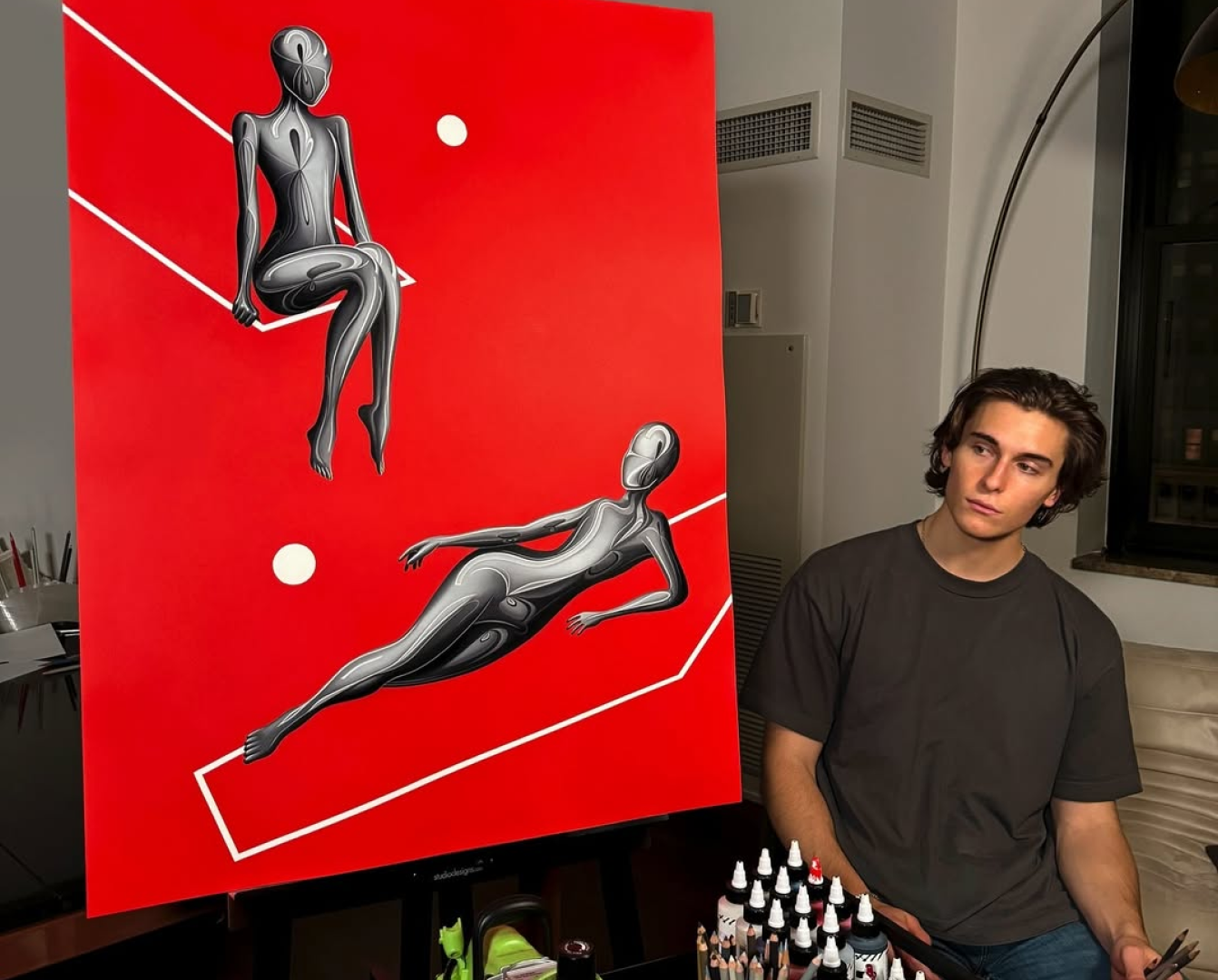
Despite the conceptual shift, Tanner’s process remains highly controlled. Every piece begins with an idea, something that has been building over time.
“My compositions usually start with a concept,” he explained.
But that concept isn’t rigid. It evolves as he works.
“I take all these ideas together… and generate these concepts.”
The act of making becomes a negotiation between control and discovery. Structure is there, but so is unpredictability.
Even the meaning isn’t fixed from the start.
“At first, I’m not always able to recognize what’s being told,” he said.
Only later, with distance, does the work begin to reveal itself.
“I’m able to… assign story or meaning to it that before wasn’t visible.”
Leaving space
That openness extends to the viewer.
“I want them to feel curiosity,” Tanner said.
His images often begin with something recognizable, a hand, a figure, a natural form, but shift just enough to resist easy understanding.
“I want them to… be wondering what else was there, what did I miss?”
The work doesn’t explain itself. It invites return.
A different kind of clarity
For Tanner, clarity isn’t about making something obvious. It’s about creating something that holds attention long enough to change how it’s seen.
“When I’m working… I’m very calm… in this meditative state,” he said.
That state, focused but open, is where the work lives.
Not in perfect representation. Not in fixed meaning.
But somewhere in between, where control gives way to uncertainty, and where something familiar begins to shift into something else.
Learn more about Tanner Valant and other artists at Seminal Artist Group.
Seminal Artist Group's mission is to make artist studios borderless—connecting visual artists with audiences worldwide through iconic, meaningful products.